

5% Yields and Safe Growth for a Nervous Market
Here's a consistent way to find them!


SpaceX In-Flight Abort: Source Wikicommons.
Editor’s note: Thank you for reading Dividends Roundtable!
This issue I highlight a pair of stocks with 5% plus yields, that are undervalued relative to close peers and poised for double-digit capital growth the next 12 months.
That’s the bread and butter of my Dividends Premium portfolio, and my unique strategy to boost your income, grow your wealth and keep you prepared for emergencies—which may occur at the same time as major negative market events.
Got a question? Post it on the Dividends Roundtable page on Substack, or in the Discord application. And keep your eyes peeled for the imminent launch of my Dividends Roundtable application! To paraphrase an old friend in the investment television business: “Here’s to the best of good-buys!”—RC
First off, I don’t claim to be clairvoyant. I’m no long-distance mind reader. And I certainly can’t make investment decisions as fast as the algorithms that now control most stock market money—let alone act on them!
What I have done for 40 plus years as an investor and advisor is to remain consistent with my wealth building goals, while continually refining strategy to achieve them more effectively.
Like every other investor, I’ve had my share of setbacks. I have not predicted every market crash, though reading back I have done something more important: Keeping my cool when prices did come down so I was well positioned for the recovery. And I can say I’ve emerged wealthier from every investment cycle the past four decades as a consequence.
I also haven’t avoided every pothole when it comes to picking individual stocks. In fact, I took a sizeable hit this summer when a telecom company recommendation cut its dividend, instead of issuing a solid Q2 report and maintaining guidance. More on that later in this post.
But by focusing on companies’ business strength and ability to pay dividends, I can claim an upper 90s percentage of stocks that have continued to increase payouts over the years. And that’s kept my overall income stream rising, despite the times when I misjudge the situation and pay the price for doing so.
This portfolio has three basic objectives: (1) To generate a high, safe and rising stream of income from multiple sources, (2) To grow principal over time by owning primarily stocks of companies where underlying business values are rising and (3) To provide a degree of stability of capital, so investors needing to withdraw funds can avoid having to lock in big losses by selling at an inopportune moment.
I follow four basic strategy rules to achieve these goals:
· Build and hold onto positions in companies with underlying businesses that are positioned for long-term growth and have healthy balance sheets.
· Build and maintain a cash reserve. My favorite parking place for cash is still the Vanguard Federal Money Market (VMFXX), which currently has a 7-day SEC yield of 3.56%.
· Periodically balancing portfolio weightings with targeted sales to ensure adequate diversification of income sources. The corollary is I never, ever overload on any one stock, no matter how attractive or cheap.
· Making fresh investments in increments of two to three, rather than all in one purchase. This puts dollar cost averaging to work—I always buy more shares at lower prices.
I report performance of this strategy every week to provide a certain measure of accountability. And the way I see it, so far so good.
Since inception in Q4 2018, the portfolio has a total return of 107.49%. That’s a new high-water mark, assuming harvesting dividends and following recommended stock weightings.
Managing Volatility with Consistency
Some years, this strategy will beat the S&P 500. And this is one of them: As of Friday’s close, our holdings have averaged a total return of 22.22%. That compares to 14% for the SPDR S&P 500 ETF (SPY), which has had a solid comeback this summer thanks to another surge in the seven largest technology stocks. And it’s ahead of the 16.51% from the iShares Dividend ETF (DVY), which constant churn by index sponsors makes it something of a moving target as well as an erratic dividend payer.
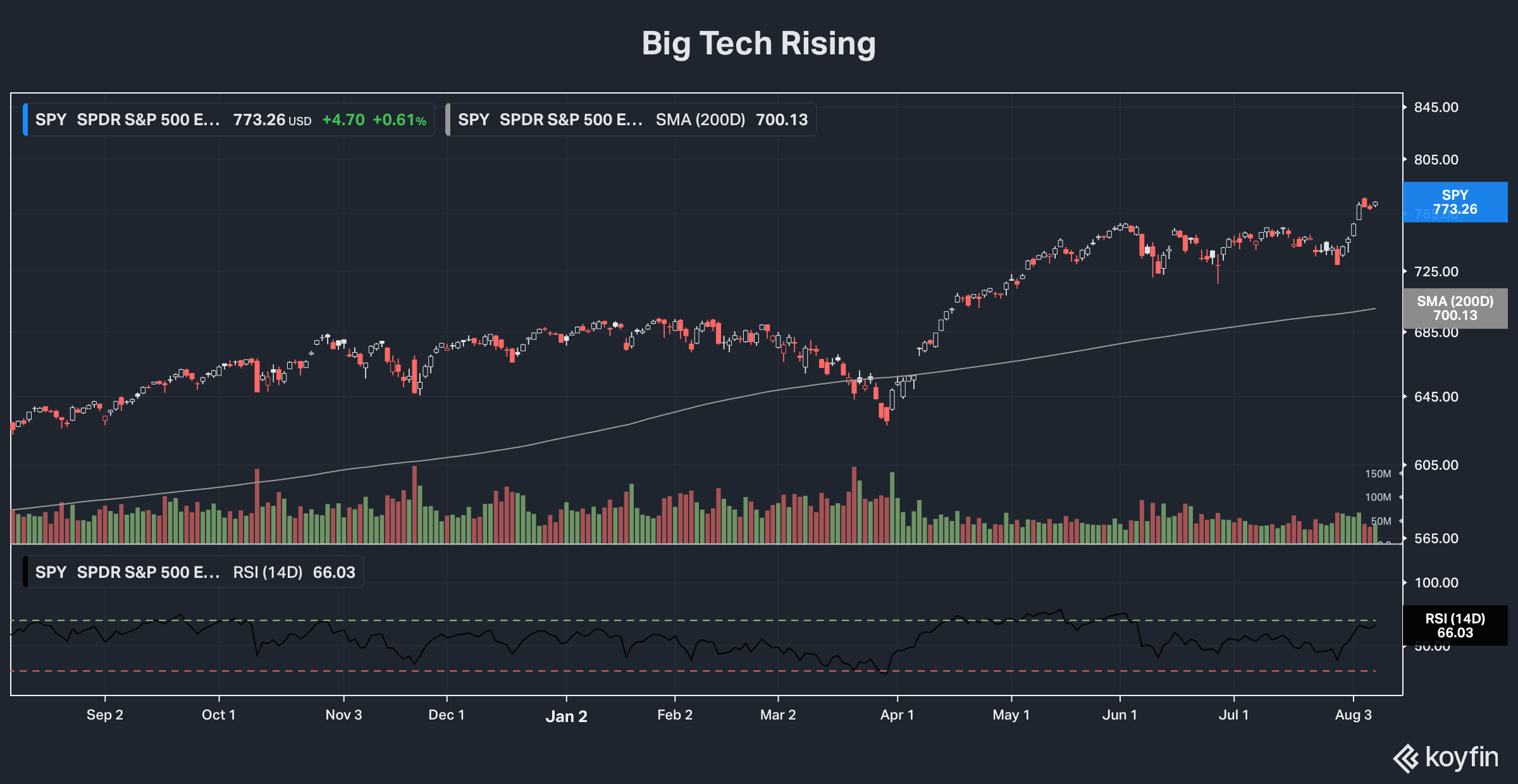
Other years, however, market action favors the concentrated big capitalization stock portfolios represented by these indexes and related ETFs. And that kind of momentum means diversified portfolios of high-quality companies will tend to lag.
That was the case earlier this decade. And the success of S&P 500-focused ETFs and close cousins is the single biggest reason passive investment strategies have been so popular up to now.
Different strokes for different folks as they say. And there are many roads to building wealth successfully in stocks—so long as investors are consistent in their approaches and disciplined about what they own, regardless of market conditions.
I believe one big reason this portfolio has been successful in its first 8 years is precisely because it doesn’t shift tactics to beat a benchmark index. And so long as we are pursuing our objectives and following the four strategy rules, I’ll be satisfied with the performance numbers.
This summer so far has been a story of sectors swapping places as leaders and laggards, sometimes on an intra-day basis depending on the news flow.
That kind of action is not uncommon this season, particularly in the “Dog Days” of August when Wall Street has traditionally made for the Hamptons. And with more money passively invested in stocks than actively managed now, a great deal of big block trading occurs at blinding speed spurred headline-following algorithms, rather than actual human beings.
There’s certainly been no shortage of attention-catching headlines this summer, particularly concerning the energy sector. And the elevated gasoline prices since Operation Epic Fury was launched have expanded the discussion to inflation, which regardless of government assurances has been elevated enough to force the Federal Reserve’s new chairman to abandon rate cuts at least for now.
What’s evolved is essentially a peace or “de-escalation” trade and a war or “re-escalation” trade.
On days when the headlines seem to indicate rising tensions—say more missiles are fired in the Strait of Hormuz or Red Sea—the re-escalation trade wins out. Oil and gas prices rise, along with stocks of other perceived inflation beneficiaries. Sectors deemed to be hurt by rising energy prices, inflation and interest rates sell off, including utilities and real estate investment trusts but also often Big Tech as well.
It’s good times for day traders—at least for those who guess right on what the next morning’s headlines will be. But this is a game most of us have no business playing, other than as an opportunity to occasionally buy what the crowd is selling the hardest and to sell what’s particularly over-extended.
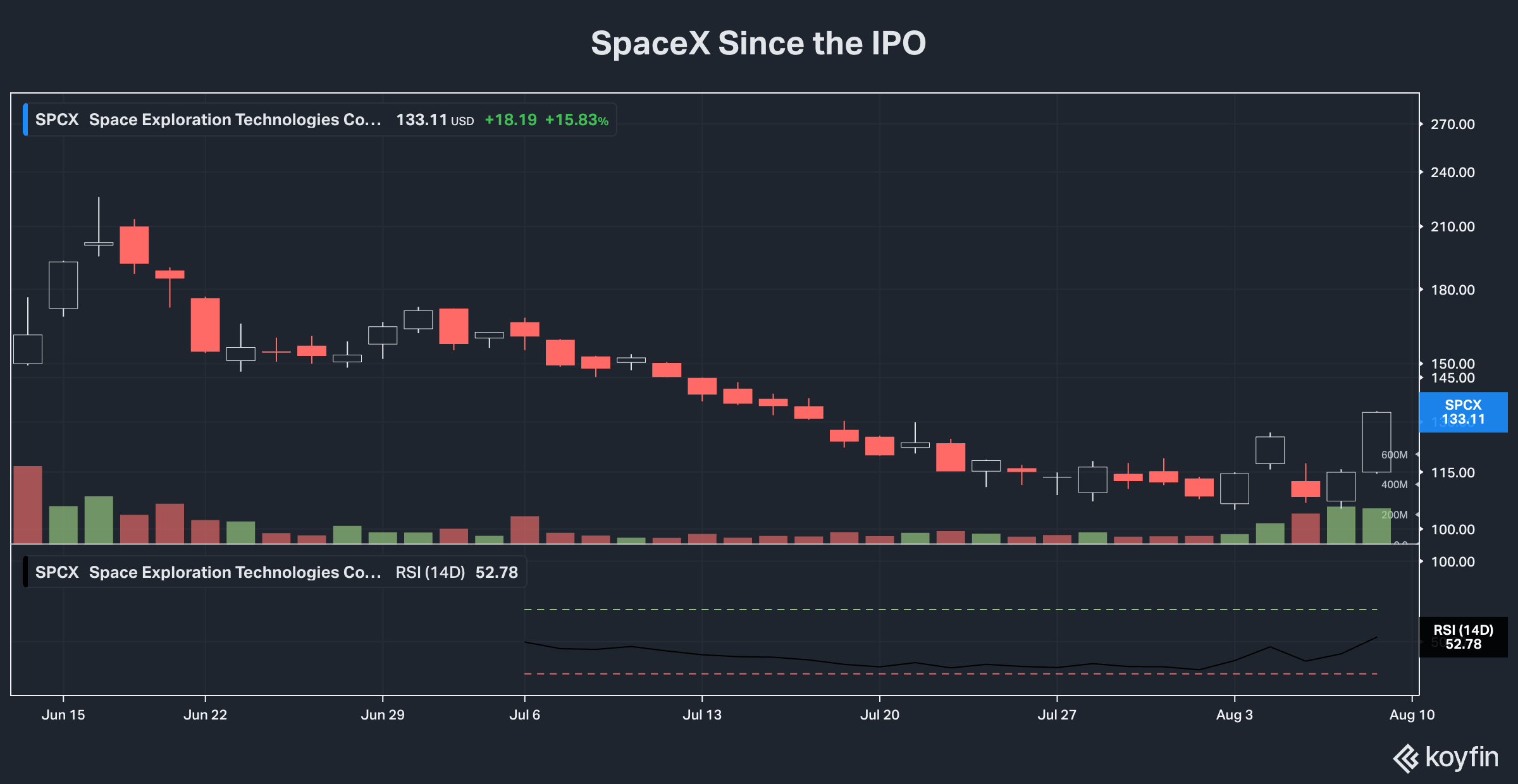
And that’s only in the context of what can build wealth for us long-term. I’m not interested in buying a hyper-expensive, no dividend stock like SpaceX (NSDQ: SPCX), for example, just because a ridiculously high post-IPO price has been whittled back a bit.
SpaceX reflects the very high ambitions of its 82% owner and CEO Elon Musk. And when big dreams combine with an unmatched ability to raise money, no one should ever underestimate the outcome.
But from a business valuation standpoint, there’s as much reason for the stock to trade at $20 as $200 a share in the next 12 months. And the continually rumored forced merger with electric vehicle player Tesla Inc (NSDQ: TSLA)—which is now a real company with actual earnings—will only scramble the situation further for this company, which is still ringing up some pretty historic losses.
No, give me instead a company that I can accurately gauge business value and pick out what are the most likely catalysts—both on the upside and downside.
Take SpaceX’ potential rivals in the telecom space, the “Big 3” US wireless companies. The same quarter its Starlink unit reported strong revenue gains—much of it from renting computer capacity—all three of these companies reported accelerating growth in customers additions, service revenue, earnings and free cash flow. And even the most “expensive” of the three--T-Mobile US (NSDQ: TMUS)--is now trading at a reasonable multiple of 14.2X expected earnings, which it’s likely to beat.
T-Mobile did actually raise its 2026 earnings guidance for the second consecutive quarter last month, following its release of record Q2 results. So did long-time laggard Verizon Communications (NYSE: VZ), while AT&T Inc (NYSE: T) is now growing earnings at a double-digit percentage rate even while trading at less than 8 times profits.
That’s value you can sink your teeth into. And it’s the kind of stocks that will make you money over time if you’re patient.
But it’s equally important to be disciplined about unloading companies that do actually stumble. Among the value stocks that have come back hard in the telecom space are Canada’s version of the US Big 3—which in that country are actually now a Big 4.
As I’ve noted before in Dividends Roundtable, the 40 years or so since the end of telecom monopolies have seen the industry basically morph into what could be described as a “competitive oligopoly model.” Being competitive in the communications space requires enormous capital outlays that can only be provided by large companies. And the last four decades have basically seen market power consolidate from what were once hundreds of would-be competitors into a handful of giants.
What’s still being worked out is the optimal number of giants to meet the imperative of maximal connectivity at affordable prices. With too few competitors, there’s less incentive to make the needed massive investments and push costs lower. And with too many, margins are undermined and investment won’t flow either.
In my view, the Chinese model of a “Big 3” is now producing optimal results for customers, companies and investors. And it’s now essentially been adopted in the US, where the US Big 3 is now thriving.
Canada, however, now has four major competitors, with Francophone champion Quebecor (TSX: QBR, OTC: QBCRF) joining BCE Inc (TSX: BCE, NYSE: BCE), Rogers Communications (TSX: RCI, NYSE: RCI) and Telus Inc (TSX: T, NYSE: TU) the past few years. And the result has been less than satisfactory for all.
Even Quebecor’s CEO has complained of a “dysfunctional” market. Last year, BCE slashed its dividend and shifted the focus of its investment to the US. And last month, Telus cut its payout, while announcing it will devote saved cash flow to cutting debt to preserve its investment grade credit rating.
To be sure, Canada’s telecom stocks look very cheap right now on a valuation basis. But there’s good reason for it: Government insistence on having four national competitors means these companies’ margins are under pressure, which means investment is as well. And so long as that’s the case, even the reduced payouts at BCE and Telus will be at risk.
At this point, I’m not any more interested in Canada’s big telecom stocks than I am SpaceX. Yes, it’s likely at some point, Ottawa will realize 3 is the magic number in telecom. And if and when that happens, I’ll be very interested in this sector.
But until then, businesses will be headed in the wrong direction. And ultimately, that’s as big a profit-killer for investors as buying a stock that’s been bid up on buying momentum and has completely cut loose from any reasonable measure of value.
Q2 Results and My Action Plan
How are our portfolio holdings faring? Q2 results and guidance updates are providing another can’t miss opportunity to assess the underlying strengths and weaknesses of the companies I hold. And in next week’s Dividends Roundtable post, I’ll have my essential analysis of where each recommendation stands. But what we’ve seen already has been very encouraging.
Since my last post, the Dividends Premium portfolio hit a new high-water mark since inception. That’s largely the result of strong performance by four stocks:
