

Big Tech's Rally Won't Last, Buy Energy
These 4 stocks are far better AI bets than Meta or NVIDIA


Editor’s note: Thanks for reading Dividends Roundtable! Use the link below to receive my investing thoughts on a regular basis. Hope everyone is enjoying a nice Mother’s Day.—RC
Buy Big Tech and sell most everything else. That pretty much sums up last week’s stock market trading.
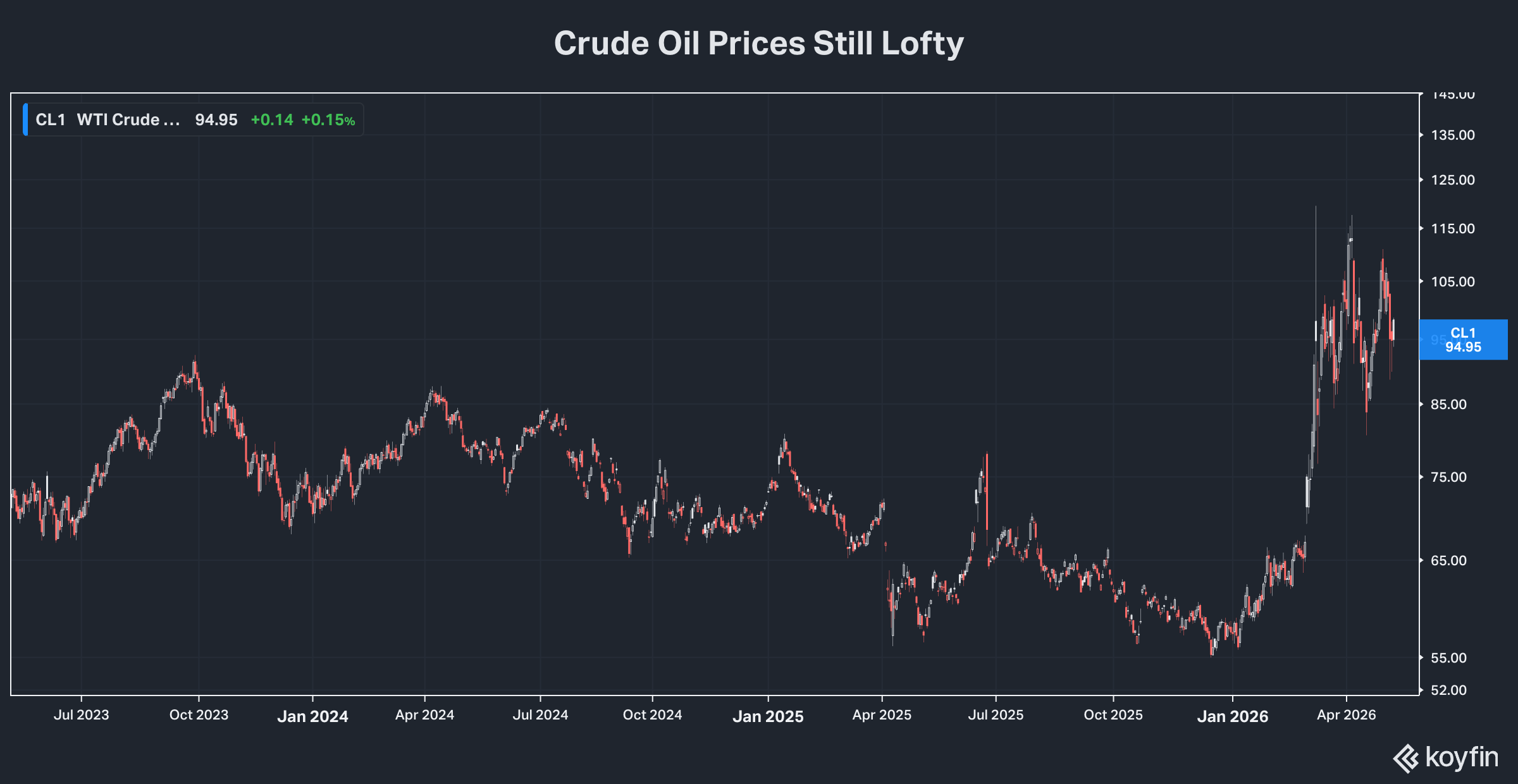
Energy was by far the worst performing sector. And everything from oil and gas producers and renewable energy companies to utilities to midstream took on water, especially later in the week.
That’s despite the fact crude oil prices remained around $100 a barrel. And every day the Strait of Hormuz isn’t open for business further strains global energy supplies.
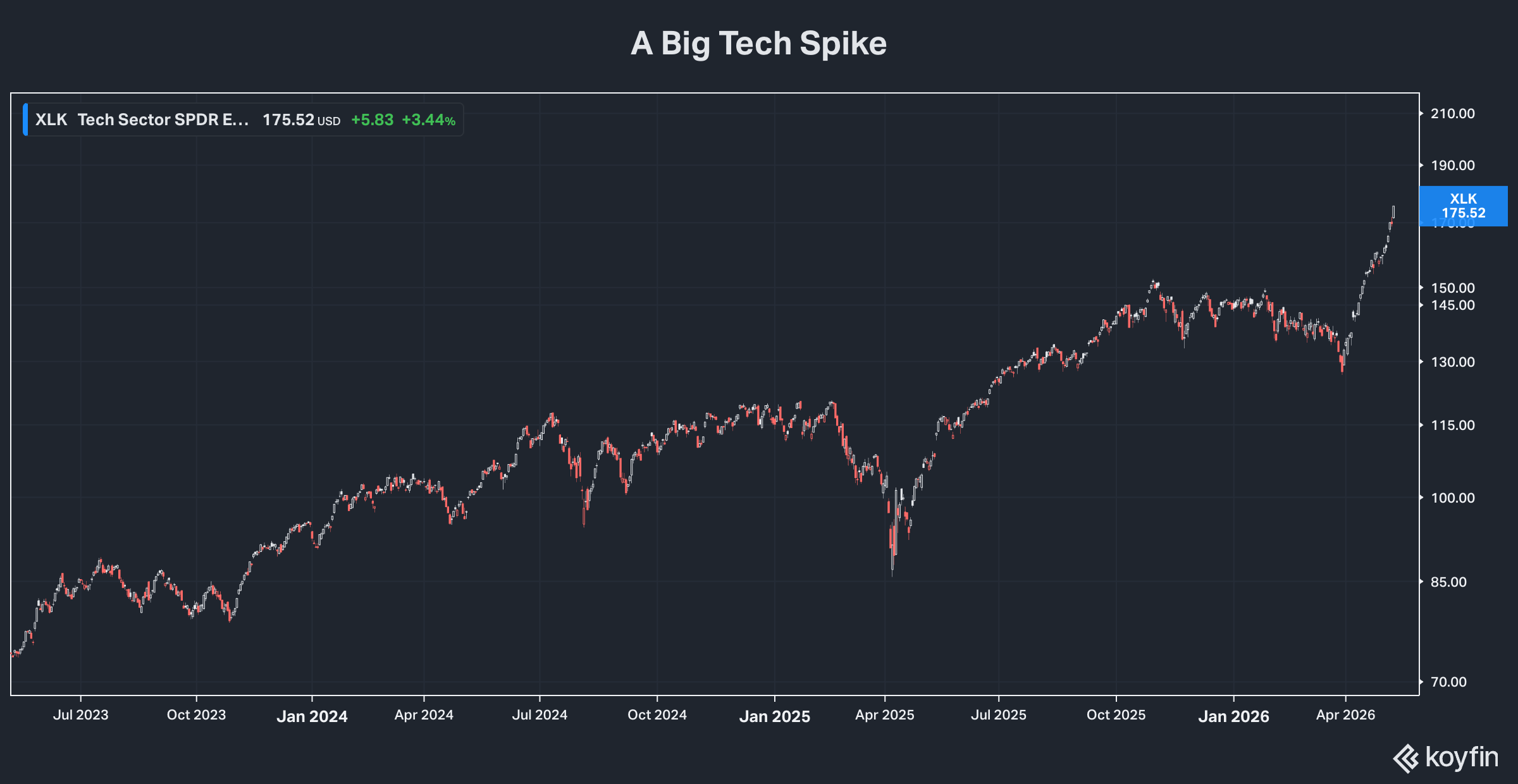
Big Tech’s monster rally comes on the heels of very strong earnings for the leaders. And the best numbers may still be yet to come, with NVIDIA (NSDQ: NVDA) reporting on May 20.
This Investment Boom is For Real
Most of us may be still figuring out how artificial intelligence will actually help us. But there’s no doubt the investment boom continues.
The past couple weeks, I’ve combed through Q1 earnings and guidance updates for 170 electric, natural gas, water and communications companies. And I can say with utmost assurance that this is one time the facts on the ground confirm the view from 30,000 feet up.
Northern Virginia remains the epicenter of the data center boom. I reported last week that Dominion Energy (NYSE: D) has raised its new connections queue to a staggering 51 gigawatts. And 11.1 GW of that is already under construction.
This week, multi-state Duke Energy (NYSE: DUK) affirmed it now has 7.6 gigawatts of agreements with data centers, with two thirds of that now under construction. And energy pipelines company Energy Transfer LP (NYSE: ET) raised financial guidance for 2026 after announcing four new connections to power plants in Oklahoma to serve large loads.
When all is said and done, it’s those contracted energy connections—with cash flush Big Tech the ultimate customer—that confirm the AI boom is for real in the US. And the contrast between stable energy prices here and soaring prices in Europe and Asia resulting from Operation Epic Fury has only cemented the advantage of American companies developing electricity-hungry AI “tokens” needed for complex solutions.
What’s not real or sustainable are the prices of leading Big Tech stocks, which are even more unmoored from business value than they were a week ago.
NVIDIA Corp (NSDQ: NVDA) may blow the doors off earnings 10 days from now. And as the S&P 500’s largest holding by weight at 8%, the stock has delivered a year-to-date return of 15%, nearly twice the gain for the index ETFs.
The problem is NVIDIA’s market capitalization is now roughly $5.2 trillion. That’s larger than the GDP of every country in the world except the US, China and Germany. It’s also more than 40X company earnings, 24X sales and 33X book.
True, NVIDIA has (for now) the dominant market position building and selling the GPUs at the heart of AI systems. But there are competitors. And as complex as GPUs are, the history of such products is they eventually become a commodity. And when the sheen of exclusivity wears off, the stocks come down hard.
Shares of Intel Corp (NSDQ: INTC), for example, have been flying high since the chip maker took on the US government as a shareholder. And value investors like me who bought and held have been rewarded for our patience, which might fairly be called stubbornness.
But it’s been a very long time coming for Intel, which was arguably valued like today’s Big Tech when microchips in computers were a relatively new thing. And its long road back is a cautionary tale for anyone tempted to sane-wash today’s Big Tech valuations.
NVIDIA is far from the only insanely valued Big Tech. And in fact it may have one of the better cases for being worth its current price. Super Micro Computer Inc (NSDQ: SMCI), for example, rallied more than 30% last week, despite announcing FYQ3 sales that were down nearly -20% sequentially from FYQ2.
The Bigger They Come….
Can the leading Big Tech stocks go higher this week? Certainly. But when stocks reach this level of valuation, they’re no longer viable wealth builders. They’re bets on momentum and the headlines algorithm traders are trained to follow.
Unfortunately, this type of stock also now dominates big market indexes. After this week, the 7 largest Big Tech stocks are 36% of the SPDR S&P 500 ETF. Throw in everything else with a close connection to the AI investment boom and the number may be closer to 60%.
That’s a lot riding on one investment theme. And not to beat a dead horse, the only historical example that comes close to what’s happening now is the IT investment boom of the late 1990s.
The companies changed the world. But the investors who chased their stocks at the highs never recovered the catastrophic losses, unless they worked very hard and were extremely patient.
Market history never repeats. But the more you invest, the easier it is to see how they often rhyme. And that doesn’t bode well for the highest priced stocks relative to value at least in decades.
If you own an S&P 500 ETF or a close cousin, you’re now well in the black after being underwater for much of 2026. And if you’re invested in any financial instrument with a generic “stock” component—including pretty much every retirement plan—you own one.
That’s all thanks to this past week’s Big Tech rally. Headlines in the financial press credit recent earnings. But price momentum has always been the primary catalyst for any stock trading at the level of valuations this sector is. It may continue this week, especially if there’s any scrap of good news in geopolitics. But those gains may also vanish quickly. Plan accordingly.
The Dividends Premium portfolio focuses on individual stocks drawn from a range of industries with strong business fundamentals—and that trade at reasonable prices relative to the value of the underlying companies.
That strategy doesn’t always preclude owning Big Tech. But at this point, my primary artificial intelligence boom bets fall into two catagories:
· Picks and shovels—What’s needed to run the AI architecture, meaning energy and electricity providers, materials and mining.
· The AI enabled—Companies that stand to benefit the most from adopting AI applications.
The stocks I own don’t make the headlines as the NVIDIAs or Amazons do. And they decidedly do not trade on momentum.
But here’s the thing. Dividends Premium stocks are still up an average of 16.7% year to date, twice the Big Tech heavy S&P 500. And the portfolio overall is still at a high-water mark since inception in autumn 2018. That’s despite a couple stocks taking minor hits last week, especially in energy.
Even in a week when it was all about Big Tech—a sector I have basically no exposure to—the portfolio held its own. Equally important, the companies laid the groundwork for future gains by posting very strong earnings and guidance updates.
A Year of Investing Dangerously
The stock market right now is obviously carrying some heavy geopolitical risks. The news from the Persian Gulf changes daily, even as 20% or so of the world’s oil and gas remains effectively embargoed. Russia and Ukraine are stalemated in their now four-year-old war, with an estimated half million dead and their economies devastated.
China is rumored eying a Taiwan blockade or even an invasion again, even as the PM of Japan has implied that could be cause for war. And though the Trump Administration’s 10% global trade tariff has been struck down, global supply chain disruption remains a fact of life, driving up costs.
The Federal Reserve seems to have little idea where official inflation is going. The central bank’s next move could be to raise or lower interest rates, depending on future data. But anyone who’s filled up their ICE automobile or truck with gasoline lately is feeling the bite of inflation.
Later this week, Kevin Warsh should be confirmed by the US Senate as the new Federal Reserve Chairman. And he’s promised swift “regime change” at the US central bank, including a new way to measure inflation that’s likely to produce lower numbers.
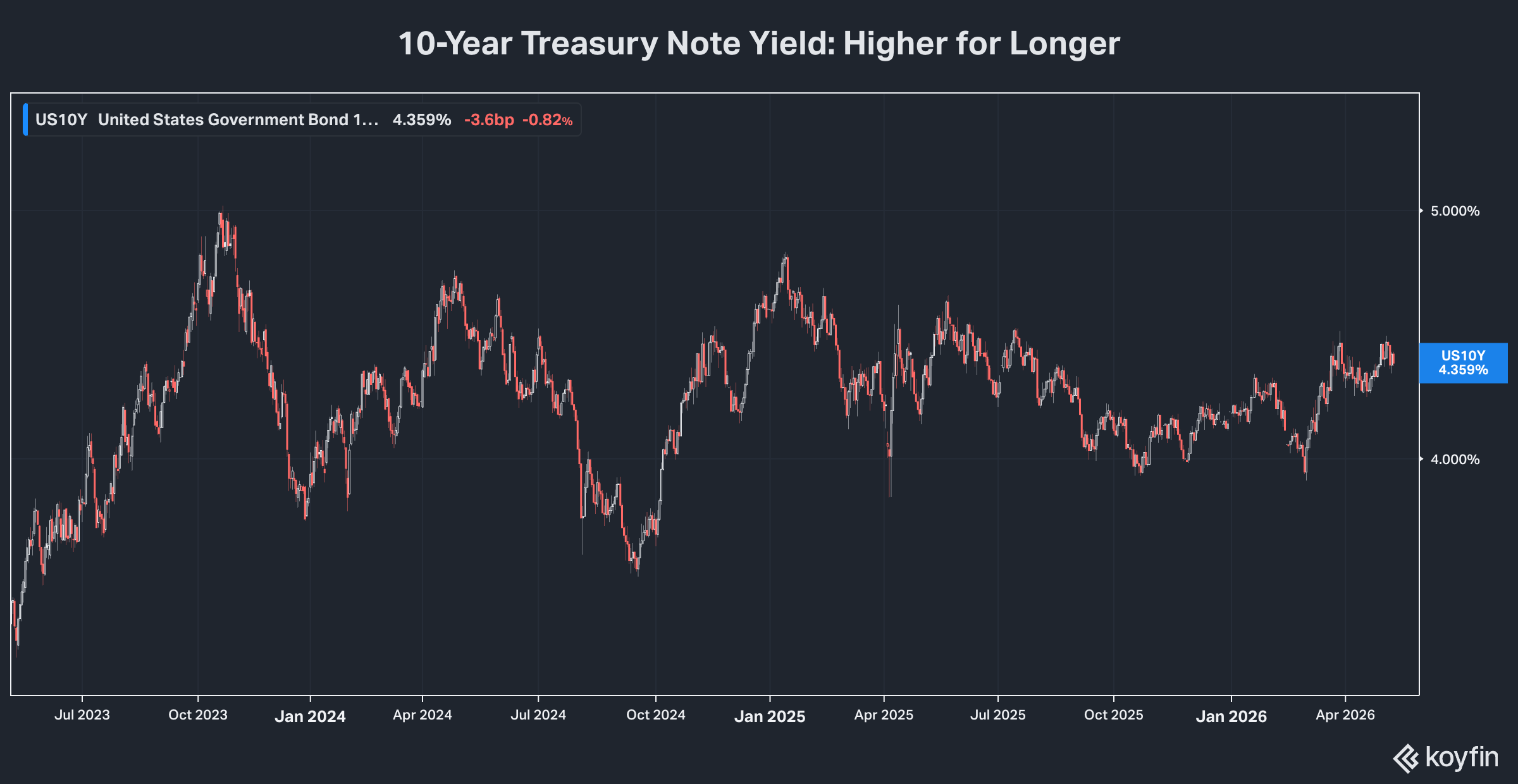
The position of chairman has a lot of power to push policy. So it’s entirely possible President Trump will get his wish of a more compliant central bank and deep cuts in the Fed Funds rate. But the big question for borrowing costs won’t be what the Fed does with Fed Funds. It’s whether the market interprets a more accommodative monetary policy as going soft on inflation. And if the answer is yes, the interest rates that matter will be heading a lot higher.
Finally, there’s the fact that the last real bear market was the Financial Crisis and Great Recession of 2007-09. That’s a long time since the last crisis to really change investor behavior from just buying the dips.
Greed is clearly the dominant driver in the stock market now after the Big Tech-led rally. And that’s precisely the time when investors should be most on their guard.
There are positives, starting with the strength in Q1 earnings. Results I’ve looked at also demonstrate companies are learning to live with higher for longer interest rates and inflation, even if they’d prefer something else. And if there is a decline in inflation expectations due to Fed policy or something else, we could see lower borrowing costs as a major driver of upside for dividend stocks across the board.
The most important thing every investor can do now is remember what we’re doing here and resolve to act accordingly, regardless of the headlines.
That’s building a reliable and rising stream of income in best-in-class companies that over time will grow your capital. And we’ll control risk following these four rules:
· Sell stocks of any companies that are weakening as businesses, even if it means taking a loss.
· Take partial profits on favorites that have run to unsustainable valuations. Use my “Consider Taking Profits” prices as a tool for doing so methodically. Deploy proceeds into a cash reserve.
· Never double down in falling stocks, even if they sell for less than “Dream Buy” prices. And always spread your bets.
· Make fresh money investments incrementally. Decide first how much you want to invest in a company. Then divide the planned purchase into three parts, investing each at roughly six-week intervals.
The best news for the Dividends Premium portfolio coming out of Q1 results and guidance updates is everything we own is on solid ground. And that means we’re going to stick with what we have.
There’s also nothing trading right now at a price above the “Profit Taking” level highlighted in my “Dream Buy Prices” table. So there’s nothing worth a partial sale, though a couple of positions are fairly close.
Best Fresh Money Buys
That leaves fresh money buys. And it shouldn’t come as a surprise that this week’s are in the sectors that performed worst the prior week—mainly energy and utilities.
These sectors are absolutely at the core of the AI investment boom. And though they didn’t get a lot of love last week, their strong results and guidance point to real upside later this year.
