

Dividend Stocks are Still Beating Big Tech
My 19 positions are 10 points ahead of the S&P 500. Here's why, and what to buy now.


Altria Corp research center, Richmond VA.
Editor’s Note: Thank you for reading Dividends Roundtable!
Q2 earnings results and guidance updates are now all-in for the stocks in the Dividends Premium portfolio. And the implications were universally solid. In fact, 10 companies have raised their full-year 2026 projections in the past couple weeks. That on top of 8 that did so after Q1 results. And there’s no better sign our holdings are still building value.
To be sure, the macro environment isn’t ideal. Inflation is stubbornly higher than the Federal Reserve’s target of 2% and employment numbers have weakened this summer. But the companies in this portfolio are thriving. And that gives me a great deal of confidence, even as the stock market continues to churn with leading and lagging sectors changing places daily.
My top two fresh money buys this month are both strong values that have actually become a bit cheaper in the past week. That’s despite reporting strong Q2 numbers and raising 2026 guidance. And it’s a great time to add to positions.
Have a question? You can now ask me anything 24-7 on our Dividends Roundtable application, exclusively for members. I will continue to chat on the Dividends Roundtable spaces on the Discord and Substack applications for the time being.
Here’s to a profitable rest of the summer!--RC
Seven AI stocks now command 34.5% of the S&P 500. Yet this year, our dividend portfolio has returned 23.23%—nearly 10 points ahead of the index, with 5X the yield.
The secret? Contrary to popular wisdom, dividend companies with strong balance sheets and business pricing power don’t shrivel and die when inflation is sticky and borrowing costs remain high. In fact, it’s their time to shine, as Dividends Premium Portfolio stocks are proving this year.
No single theme has captured investors’ imagination this decade more than artificial intelligence. For most of this decade, the largest Big Tech companies have led the market, with investors consistently buying the dips. And as a result, Apple, Amazon.com and especially NVIDIA are the most expensive stocks in history, as well as the ultimate FOMO stocks.
Ironically, they stopped being the leaders a while ago. The SPDR Energy ETF (XLE), for example, is up more than 40% year to date, nearly three times the return on the S&P 500. That adds to gains the past few years that have seen the Big Oil dominated ETF rise roughly six-fold since bottoming in mid-2020.
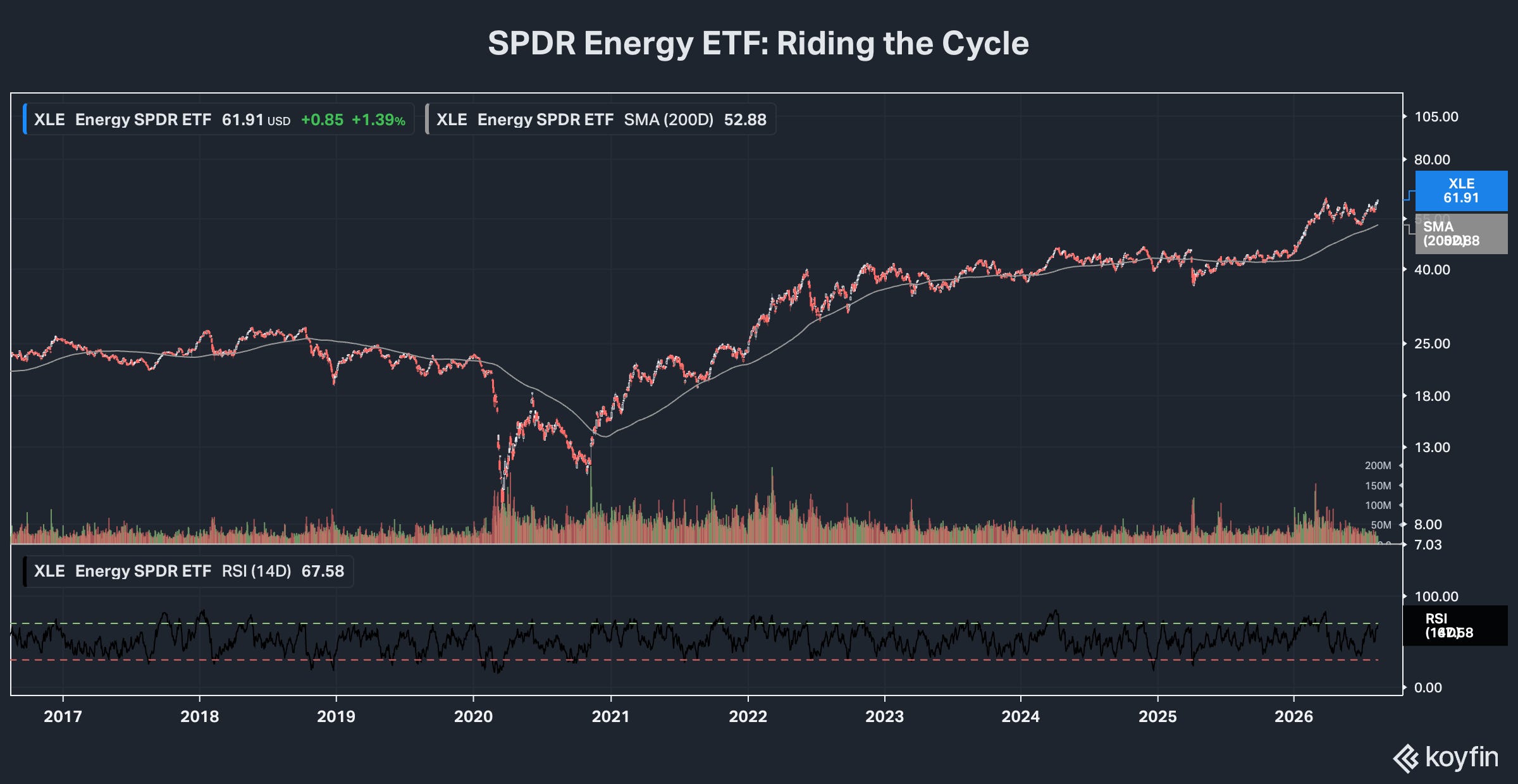
This year’s gains are in part the result of Operation Epic Fury gone awry. But energy is also in the middle innings of a long-term upcycle, driven by growth in underlying demand that continues to exceed investment. And high-quality sector stocks are an essential piece of every portfolio.
Less noticed despite being even more powerful is the continuing surge we’ve seen in high-quality dividend stocks across a range of industries.
The conventional wisdom repeated ad nauseum in investment media is stocks paying dividends are mere “bond substitutes.” And like bonds, they’re winners when interest rates drop and losers when they rise.
The past few years are just the latest example of just how ridiculous this narrative is. As of Friday’s close, the average year-to-date total return for Dividends Premium Portfolio stocks is 23.23%. That’s almost 10 percentage points ahead of the S&P 500—despite Big Tech’s summer run-up--with nearly 5X the yield and much lower risk.
Bottom line: Dividend stocks are not just lining investors’ pockets with high yields. They’re actually providing low risk capital gains that are beating the Big Tech market favorites! And that’s in an environment of higher for longer interest rates.
But Beating Indexes is Not My Bag
It’s never my primary objective just to beat the big cap stock market indexes. Some years, a dividend and quality stock portfolio will lead. And in others it will lag.
Rather, I’m always pursuing three major objectives:
· Building a generous and growing stream of dividends that will endure even if the economy weakens.
· Growing capital reliably by investing in high-quality stocks with growing businesses that will appreciate over time as earnings and dividends increase.
· Minimizing overall portfolio volatility, so investors following this strategy will always be able to draw cash without compromising principal, even in the middle of severe and violent stock market events.
So far, this portfolio has achieved all three. The total return since inception in September 2018, as of Friday’s close, was 107.91%. And our weighted average yield has ranged from 4% to 6%, depending on market conditions and how much cash I’ve held.
Not every pick has been a winner. I’ve held onto some stocks far too long. And I’ve up on others too soon, LyondellBasell Industries (NYSE: LYB) being a good example in 2026.
But the portfolio has overall done its job of building dividends, accumulating value and controlling risk following the four basic strategy rules:
· Building and hold onto positions in companies with underlying businesses set for long-term growth that have healthy balance sheets, selling when that’s no longer true.
· Maintaining a cash reserve against the possibility of a broad correction. Vanguard Federal Money Market (VMFXX) pays a decent 7-day SEC yield of 3.61%. And our money is always there to access for whatever reason.
· Never overloading on any one stock. Instead, I always spread bets to limit risk. That means both diversification and periodic re-weighting as well.
· Investing incrementally, rather than buying all in one purchase.
It sounds simple. In practice, it’s sometimes difficult to follow. I’m not 100% immune from falling in love with my investment ideas. I’m not a long-distance mind reader into corporate boardrooms. And I sometimes overlook crucial facts staring me right in the face.
But following this strategy has saved me from enough mistakes to produce solid results in line with our objectives. And I’m confident it will going forward.
Last week’s big news had to do with inflation. The two biggest numbers released were “core” Producer Price Inflation (PPI) and core Consumer Price Inflation (CPI), both for the month of July. Both exclude energy and food prices, which have been rising for most of this year.
Core PPI was up 0.2% from June, for a 12-month rate of 4.2%. Core CPI was also up 0.2% sequentially, with the 12-month rate running at 3.4%.
Both numbers are well above the Federal Reserve’s often stated target of 2% annualized inflation. And the trend is still that so-called “stickier” items like healthcare and shelter are rising faster than “cyclical” factors. That’s a worrisome sign overall inflation may remain considerably higher for longer.
In addition, while the official unemployment rate ticked slightly lower to just 4.1%, that was entirely due to more people leaving the workforce as the “participation” rate fell to just 61.4% of Americans. Actual job creation was negative, even as the Bureau of Labor Statistics revised down estimates from previous months. And official wage growth is lagging the rate of inflation, affirming worsening affordability pressures that continue to show up in property market statistics.
Not surprisingly, how this data was interpreted varied widely by news outlet, with political leanings weighing heavily. That’s nothing new, though it does make “considering the source” more critical than ever for investors.
My advice: Ignore the commentary. The best clues to what’s happening in the economy are always from company earnings.
No one operates in a vacuum. But what’s important to us isn’t the exact CPI or wage growth number. It’s how our companies are dealing with current conditions—and how they’re likely to fare if the headwinds worsen or lessen.
The lesson from Q2 results is our portfolio holdings are getting on pretty well. That’s despite affordability pressures and what remain higher for longer borrowing costs.
Debt interest costs are a pressure point for many companies, including in industries where sales tend to be steady like telecom. And I expect we’ll see more dividend cuts in the second half of 2026, as management seeks to apply more cash to pay off debt.
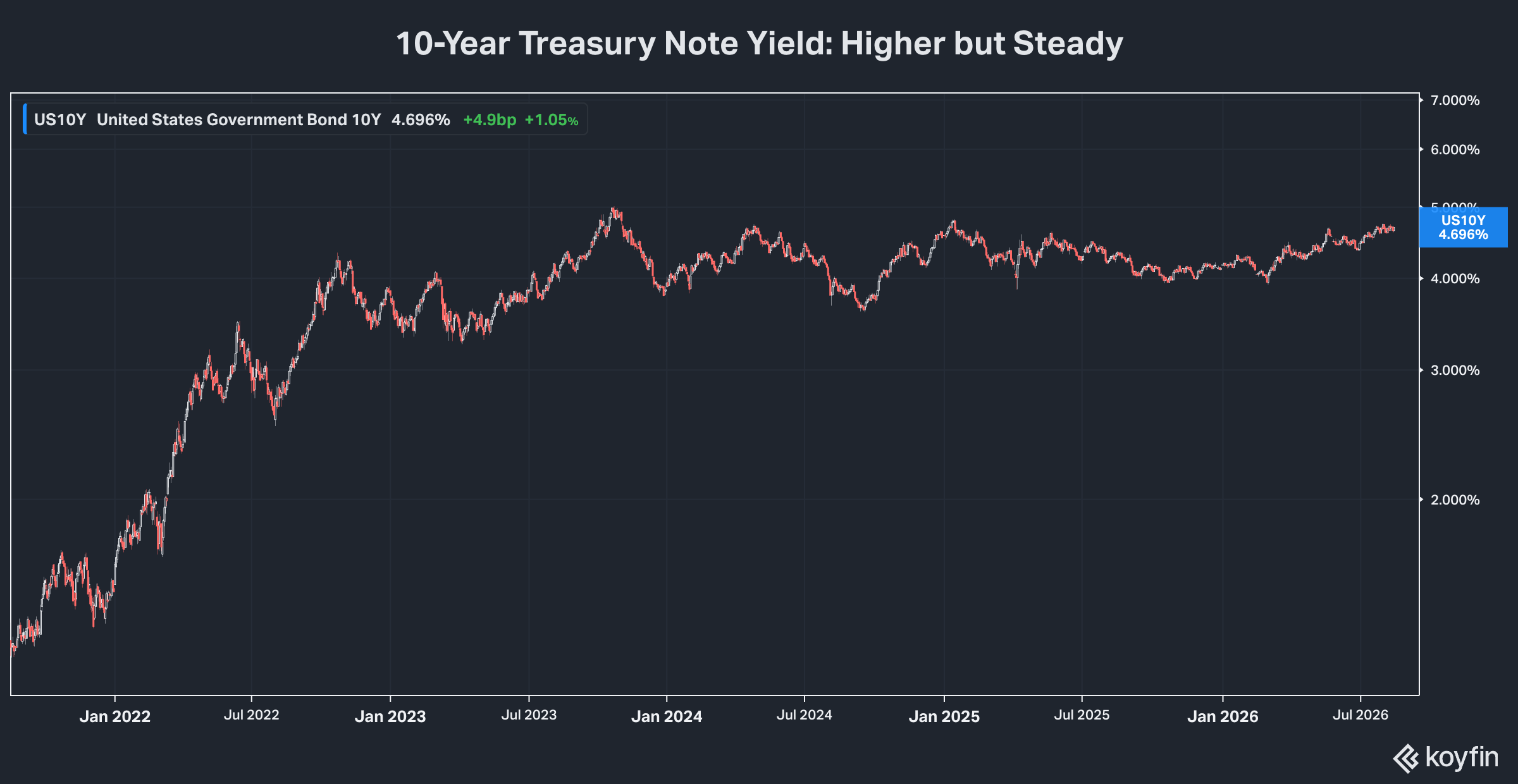
But the lack of movement in the 10-year Treasury note yield in response to CPI and PPI news last week is a pretty good sign the bond market is pricing in the stubbornly high inflation we’re seeing now. And it’s noteworthy that the yield is still below this decade’s high of 5% plus.
That means companies already dealing successfully with higher borrowing costs should be able to continue doing so. And that includes all of the portfolio recommendations to date.
The companies in this portfolio have one other key strength that most of their stocks are not fully reflecting. That’s pricing power—the ability to push on any costs that are beyond their control to customers.
That means they’re less affected by affordability pressures, on either the cost or revenue side. And its solid support for investment plans and growth rates that both ensure dividend safety and provide fuel for capital gains.
Action Plan
So, what’s our action plan for this month?
First and foremost, stay the course with these positions. Had any of our companies posted Q2 results showing real weakening, it would have been cause for selling.
The current economic environment is far from ideal. But neither is it particularly onerous for most companies. And many sectors are enjoying a period of less regulation along with favorable tax policy.
In other words, if companies are floundering now, we don’t want to stick around to see what happens if inflation worsens and interest rates spike—or if the stock market suddenly goes into a tailspin and shuts down equity raises.
By raising guidance for 2026, 10 of our companies just demonstrated their performance is actually much better than management initially expected this year. And the companies holding guidance steady following Q2 results are good candidates for a boost sometime in the second half of the year.
The one company that did cut 2026 guidance—Clearway Energy (NYSE: CWEN)—actually did so because of the weather, even as it shored up projections for 2027 and beyond.
We’re going to want to keep an eye on developments with all of them, and particularly the next round of earnings results in three months. But for now, we can be confident holding all of them.
The second piece of the action plan is to keep a very close eye on prices before you buy.
I am raising buy in prices for three stocks:
· NatWest Group (London: NWG, NYSE: NWG)—Buy<17 up from Buy<16
· Stanley Black & Decker (NYSE: SWK)—Buy<90 up from Buy<80
· TotalEnergies (Paris: TTE, NYSE: TTE)—Buy<80 up from Buy<75
Notably, prices of all three stocks are still above those buy-in levels. Investor patience is still required. But these companies earned those higher entry points by posting strong results and raising guidance. And if/when prices do retreat to those prices, I’ll be very comfortable recommending them there, and possibly adding to existing positions.
The top recommendations for fresh money this month are Altria Group (NYSE: MO) and Arrow Financial (NSDQ: AROW). But any stocks trading below my buy prices are worth adding to if your position is light.
The Positions: What’s Important from Q2 Results
I use the following criteria for picking stocks:
Dividend sustainability. A clear path to consistently and reliably funding dividend growth is essential.
Revenue Reliability. Cash flows need to be anchored in underlying business stability as assessed by scale, creditworthiness of customers and cyclicality. Pricing power is essential as stagflation—rising unemployment combined with higher inflation—is a distinct threat for the first time in decades.
Regulatory Exposure. Legal and bureaucratic threats to future revenue must be manageable.
Balance Sheet. Until long-term borrowing costs start to decline, highly leveraged companies will be at risk for dividend cuts and worse. Investment grade credit ratings will be increasingly important to holding down the cost of debt, to the extent the economy slows.
Operating Efficiency. Companies must be able to squeeze costs from their businesses and improve productivity consistently.
If a company does well on one or two of these criteria, it will likely stack up well on all of them. And it will generate high, reliable and growing income, while growing principal over the long-term—and keeping our overall portfolio value steady in the near-term.
I feature “Quality Grade” ratings for portfolio companies in the “Dividends Dream Buys” table for reference. Companies drawing high marks for all five criteria rate “A.” Those measuring up slightly less well will draw a “B” and so on. By owning a diversified and balanced portfolio, we can afford to take the risk of owning lower rated fare.
Here’s what’s important from our companies’ calendar Q2 results and guidance updates.
Altria Group (NYSE: MO)—130 shares, Buy<75
The US tobacco products giant posted solid Q2 results, including a 1.2% boost in revenue net of excise taxes. Combined with cost cutting and stock buybacks, that pushed up adjusted earnings per share 2.8% and 4.9% for the year-to-date period.
That was enough for Altria to raise the lower end of its 2026 earnings guidance to $5.61 per share from a previous $5.56. The top end remained at $5.72, for an annualized growth rate of 3.5% to 5%.
Revenue from “smokeable” products increased by 2% net of excise taxes, with operating income up 2.4% on the same basis. The key driver of growth was price increases, which pushed up adjusted margins by 30 basis points to 64.8% of revenue. That offset the negative impact of a -3.2% drop in product shipment, following a -4.5% decline in cigarette sales by volume.
Cigarettes remain Altria’s number one source of revenue. Declining demand is clearly the long-term trend. The drop has recently been accelerated by inflation reducing customers’ disposable incomes. Nonetheless, demand for the company’s signature Marlboro brand remains stickier than most, as the nation’s leading “premium” cigarette with market share of 59.6%--up 10 basis points from Q1.
Altria has gained ground in the “discount” market as well, adding 190 basis points to market share over the past year. That’s raised its total share of the US cigarette market to 45.5%.
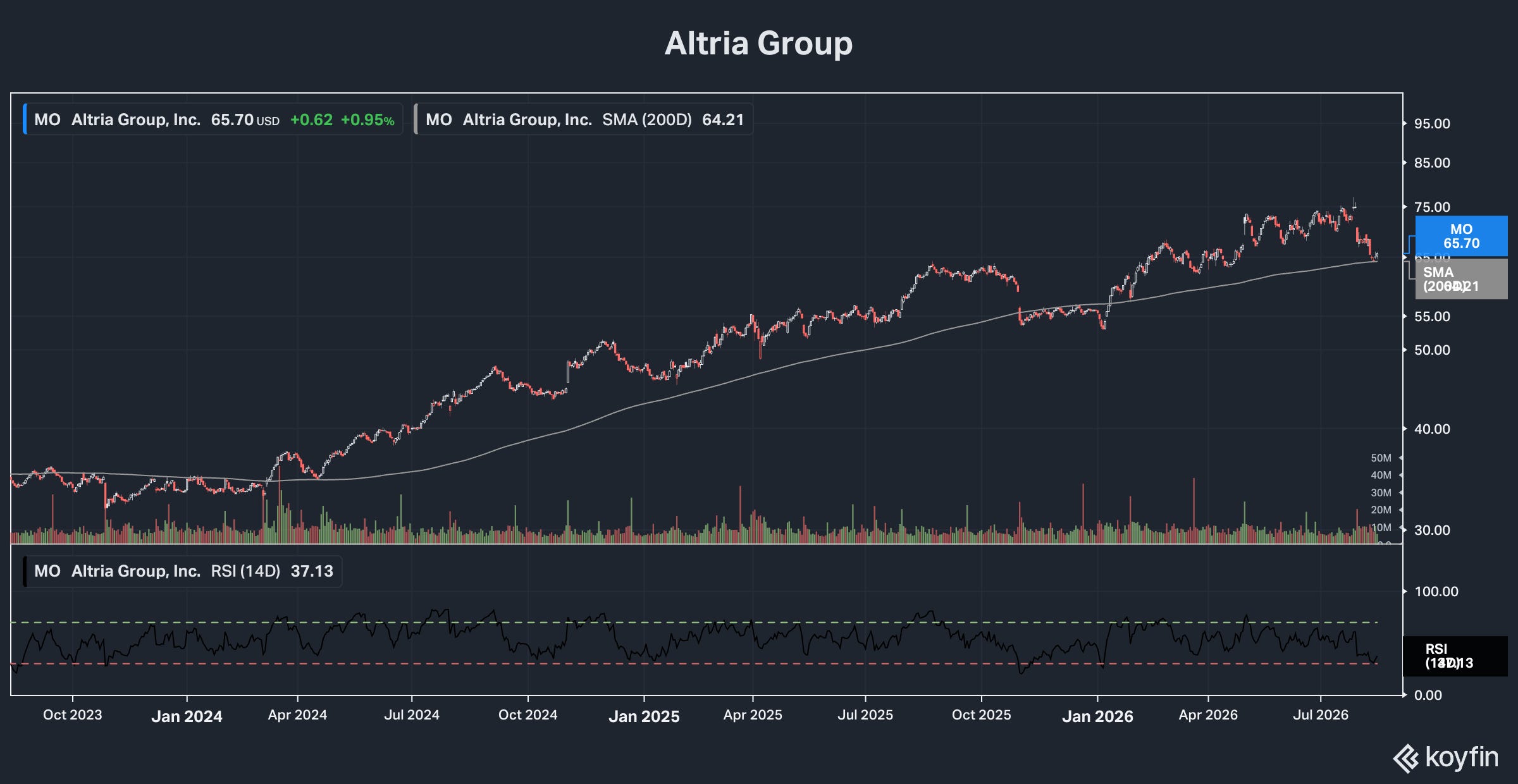
Despite this good news and the guidance boost, Altria shares have dropped from the low 70s to the mid-60s since the announcement. That’s the result of disappointing results for its oral tobacco product sales, with Q2 volumes dropping -2% from last year “adjusted for trade inventory movements.” The company’s on! brands dropped to 8.2% of the US oral tobacco category, a loss of 30 basis points.
Management considers oral products the eventual future of the company. So, the negative investor reaction to this retrenchment and obvious skepticism to management assurances of a rebound are no great surprise.
But the primary value proposition with this stock is not revenue growth. It’s steady earnings growth fueled by stable sales aided by disciplined cost reduction and the aggressive stock buyback program, which is aided by asset sales. And by that measure, the company is doing its job for this portfolio.
Those without positions should take advantage of the past month’s dip to buy the full 130 shares at 75 or lower. The partial profit taking price is 90.
